
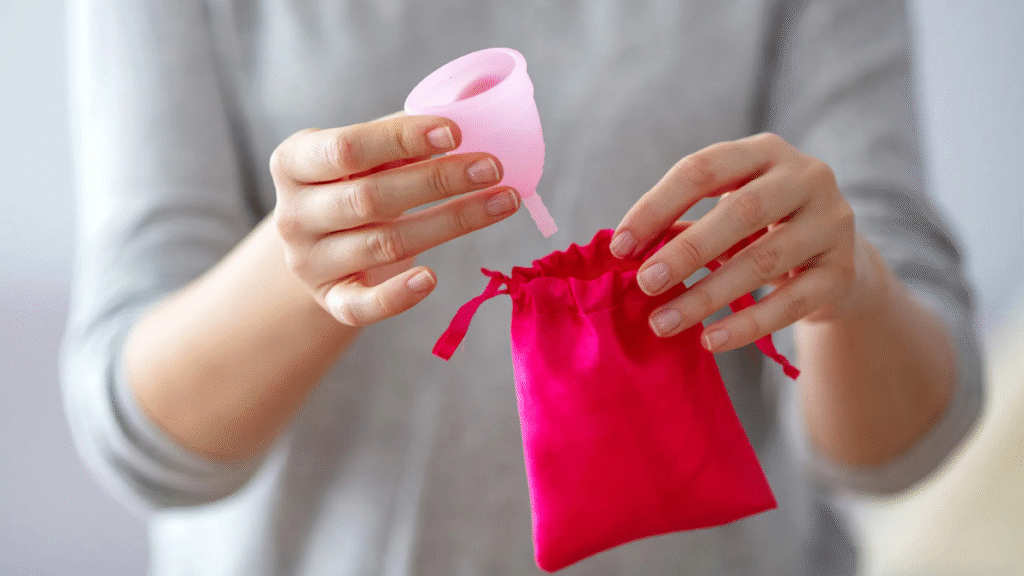
Menstrual Cup….. You must have heard the name, right? But still, many women have doubts about it. Questions like how to use it, how to choose the right size, and lack of proper information often create confusion and low In this blog, we share Menstrual cup guide for beginners, including how to use them, choose the right size, benefits, and safety tips. find out more!
What is a Menstrual Cup?
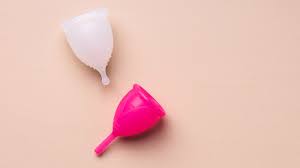
A special cup that collects your period blood –very interesting, right? That is called a Menstrual Cup. It is an alternative to sanitary pads and tampons. A menstrual cup is a reusable feminine hygiene product. It is very small, flexible, and shaped like a funnel. The cup is usually made of silicone, rubber, or latex. It is designed in such a way that it can properly store blood during your periods.
How Does a Menstrual Cup Work?
The cup sits gently below your cervix and forms a small seal with the vaginal walls. This seal prevents leakage. As blood flows during your period, the cup collects it. When it’s full or after 8–12 hours, you remove it, empty it, wash it, and reinsert it. It sounds a little intimidating at first, but millions of women say that once they get used to it, cups are more comfortable and convenient than pads or tampons.
How to Choose the Right Menstrual Cup Size?
Every woman’s body and period are different. That’s why choosing the right menstrual cup size is important. The right size keeps you comfortable, prevents leaks, and gives you confidence. Let’s see how to pick the right size for you.
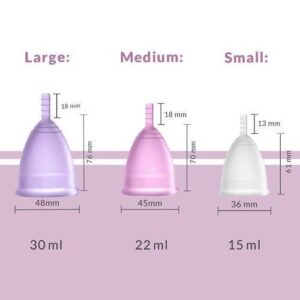
Most brands offer 3 basic sizes:
Menstrual cups usually come in three sizes,
- Small
- Medium
- Large
Here’s the simplest Menstrual cup size guide:
Choose Small If:
- You are a teenager
- You are new to periods
- Your flow is light
- You have a low cervix
Small cups are soft, easy to insert, and perfect for young girls or first-time users.
Choose Medium If:
- You are 20+ years old
- You haven’t given birth vaginally
- Your flow is light to medium
- You have a medium cervix height
Medium cups are the most commonly used size and work well for most adult women.
Choose Large If:
- You have given birth vaginally
- You are over 30 years old
- Your flow is heavy
- You have a high cervix
Large cups offer higher capacity and are ideal for women who need extra space and support.
How to use a Menstrual Cups:
Using a menstrual cup for the first time may feel uncomfortable, but once you learn the right way, it will be much easier and better than other options. Before inserting, wet the rim of the cup with water or a water-based lubricant.
How to Insert your Menstrual Cups:
- Wash your hands well.
- Apply water or water-based lubricant to the rim.
- Fold the cup tightly in half and hold it in one hand, with the rim facing upward.
- In a comfortable squatting position, gently insert it into your vagina, just like you would insert a tampon without an applicator. It should sit a few inches below your cervix.
- Once inside, rotate the cup slightly. It will pop open and create a seal to prevent leaks.
If inserted correctly, you should not feel your menstrual cup. You can walk, sit, stand, jump, or do daily activities without it slipping out.
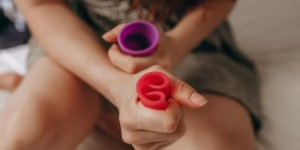
When to Remove your Menstrual Cups:
Depending on your flow, you can wear a menstrual cup for 6 to 12 hours.
You should always remove it within 12 hours. If it fills up earlier, empty it before the time to avoid leaks.
How to Remove your Menstrual Cups:
- Wash your hands well.
- Insert your thumb and index finger into your vagina. Gently pull the stem until you can reach the base.
- Pinch the base to release the seal, then slowly pull it out.
- Once removed, empty the cup into the sink or toilet.
Advantages of Menstrual Cups:
1. Reusable & eco-friendly – One cup can last 5–10 years, reducing waste.
2. Cost-effective – A one-time purchase saves money in the long run.
3. Longer wear time -Can be worn up to 10–12 hours, even overnight.
4. Comfortable once placed correctly -Many women don’t even feel it.
5. No dryness – Unlike tampons, cups don’t absorb natural vaginal moisture.
6. Less odor – Since blood is collected, not exposed to air
7. Holds more blood- A menstrual cup can hold more blood than pads or tampons. For heavy flow, you can remove it every 5–6 hours, clean it, and wear again to avoid overflow.
Disadvantages of Menstrual Cups:
1. Learning curve – Insertion and removal may be tricky initially.
2. Messy at first – Emptying and cleaning in public restrooms can be inconvenient.
3. Not suitable for all women – Women with certain medical conditions or those uncomfortable with insertion may struggle.
4. Maintenance needed -Requires boiling/sterilization before and after each cycle.
Hygiene Tips for Menstrual Cups:
- Wash hands before insertion/removal.
- Empty every 8–12 hours depending on flow.
- Clean with mild, fragrance-free soap and water.
- Sterilize in boiling water before and after each period.
Menstrual Cup Aftercare:
Once your cycle is over:
-
Wash the cup thoroughly
-
Sterilize it in boiling water
-
Dry it completely
-
Store in a soft, breathable pouch
With proper care:
-
Reusable cups last years
-
They stay hygienic and safe
-
You save money every single month
Disposable cups must be thrown away after one use.
Precautions When Using a Menstrual Cup
Using a menstrual cup is safe, but following the right precautions keeps your period experience comfortable, hygienic, and worry-free.
1. Always Wash Your Hands
Before inserting or removing the cup, wash your hands thoroughly to prevent infections.
2. Sterilize the Cup Before and After Each Cycle
Boil the cup for 5–7 minutes at the beginning and end of every period.
This kills bacteria and keeps it safe for reuse.
3. Don’t Use Strong or Scented Soaps
Use only mild, fragrance-free soap for cleaning.
Harsh chemicals can irritate the vagina.
4. Don’t Keep the Cup Inside for More Than 12 Hours
Even though cups are safe, remove and clean them every 8–12 hours depending on flow.
5. Break the Seal Before Removing
Never pull the cup by the stem alone. Always pinch the base to release suction to avoid discomfort or pain.
6. Avoid Using It If You Have Certain Medical Conditions
Consult a doctor if you have, Severe pelvic pain, Pelvic organ prolapse, Fibroids, Recently had vaginal surgery.
7. Not Recommended for People Allergic to Silicone or Latex
Choose a material compatible with your body.
8. Avoid Using Oil-Based Lubricants
Use water-based lubricants only, as oil can damage the silicone.
9. Insert Correctly to Avoid Leaks
Make sure the cup has fully opened and sealed after insertion.
10. Store Properly
Keep the cup in a breathable cotton pouch, not in plastic.
Proper airflow prevents odor and bacterial growth.
Common Questions Women Ask About Menstrual Cups:
1. Does insertion hurt?
No — not if the cup is folded properly and inserted gently.
Lubricant helps!
2. Can a menstrual cup get stuck inside?
No. Your vagina is not endless. Just relax, pinch the base, and remove it.
3. Can I pee with the cup inside?
Yes! Your urethra and vagina are different openings.
4. Is it safe for virgins?
Yes, but choose a small size.
5. Can I wear it while sleeping?
Absolutely — cups are perfect for overnight protection.
Final Thoughts
A menstrual cup is a modern, money-saving, and eco-friendly option. At first, using a menstrual cup may feel a little uncomfortable, but if used properly, it can be much more comfortable and healthier than pads or tampons. Choosing the right size and knowing the correct way to use it is very important. With proper cleaning and hygiene, it can be your safest and long-lasting period solution.