Knowing your skin type is absolutely essential before using the right products. If you chooseskincareproducts based on your skin type, they will help you achieve a glowing and smooth complexion. Many people end up using the wrong products without understanding their skin type, which can make the skin extremely dry or oily. In this blog, we will learn how to know your skin type at home and what types of products to use for each skin type.
Why Knowing Your Skin Type is Important
The skin is the largest organ of our body, and its needs can vary depending on factors like environment, lifestyle, age, and hormonal changes. Many people unknowingly use the wrong skincare products, which can lead to problems such as breakouts, dryness, irritation, or excessive oiliness. Understanding your skin type allows you to choose the right products tailored to its specific needs. By doing so, you can protect your skin from common issues like acne, dryness, burning sensations, and oily buildup—ultimately helping you maintain healthier, clearer, and more balanced skin.
Generally, There Are 5 Types of Skin
Each person’s skin is unique, but in general, skin types are categorized into five main types,
1. Normal Skin Type
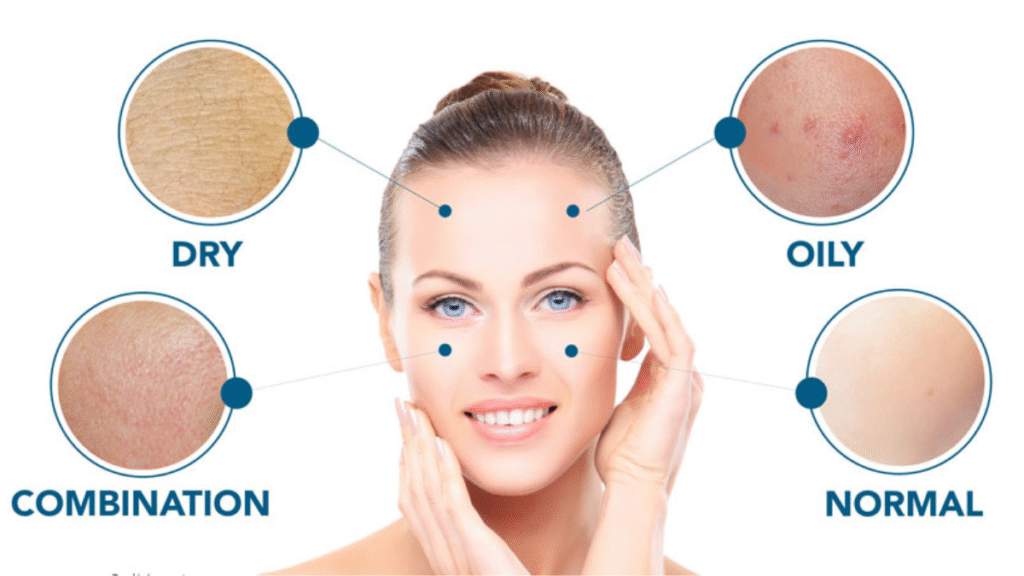
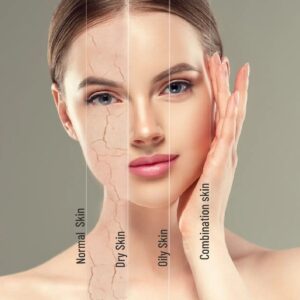
This type of skin is usually smooth in texture. Normal skin is neither too oily nor too dry. The pores are small and not easily visible. It has an even texture with minimal blemishes or imperfections.
2. Oily Skin Type
Oily skin is easy to identify. This type of skin produces excess sebum, which makes the face appear shiny, especially in the T-zone area including the forehead, nose, and chin. When touched, the skin feels greasy or slippery. Due to the overproduction of oil, the pores often remain open and enlarged, making the skin more prone to acne, blackheads, and clogged pores. However, one of the benefits of oily skin is that it tends to show signs of aging much later compared to other skin types.
3. Dry Skin Type
Dry skin usually feels tight, rough, or flaky. It often appears dull and lacks a natural glow. After using a face wash, dry skin may feel extra tight, and dead skin cells may become visible when you gently touch your face. This skin type is more prone to premature signs of aging, including wrinkles and fine lines. Proper hydration is essential for managing dry skin and restoring its softness and elasticity.
4. Combination Skin Type
Combination skin is a mix of oily and dry skin characteristics. Typically, the T-zone (forehead, nose, and chin) remains oily, while the cheeks and other areas may be dry or normal. Managing combination skin can be tricky because it requires a balanced skincare routine that addresses both dryness and oiliness. It often means using different products or adjusting your routine to treat specific areas of the face according to their needs.
5. Sensitive Skin Type
Sensitive skin reacts easily to skincare products or environmental factors. This type of skin may become red, itchy, or irritated after applying certain products. Sometimes, it also feels a burning or stinging sensation. Sensitive skin may overlap with dry, oily, or combination skin types, which makes it even more important to choose gentle, hypoallergenic, and fragrance-free skincare products to avoid flare-ups or damage.
How to Identify Your Skin Type at Home
You can identify your skin type easily at home by following two simple methods,
The first: method is called the Bare-Face Test. To begin, wash your face with a gentle cleanser and pat it dry. Do not apply any moisturizer, toner, or product afterward. Leave your skin completely bare for 30 to 60 minutes. After that, observe how your skin looks and feels. If your skin feels tight or flaky, it’s likely dry. If you notice shine only in the T-zone, you probably have combination skin. If your entire face is shiny, your skin is oily. If your skin feels calm, balanced, and comfortable, you most likely have normal skin. If it feels irritated, red, or itchy, you may have sensitive skin.
The second: method is the Tissue Paper Test. Cut a tissue into small pieces and gently press them on different areas of your face, including the forehead, nose, cheeks, and chin. If all the tissue pieces stick, your skin is oily. If none of them stick, your skin is dry. If only the T-zone areas (forehead and nose) retain the tissue while the rest fall off, your skin is combination. If the tissue pieces stay for a while and fall off gradually, your skin is normal.
Now that you know your skin type, you can choose the right products. Here’s a complete guide for each skin type.
Best Skincare Routine for Normal Skin
Use a mild, sulfate-free cleanser.
Apply a lightweight moisturizer daily.
Use sunscreen every morning.
Exfoliate once a week to maintain smoothness.
Avoid overly harsh or drying products.
Best Skincare Routine for Oily Skin
Use a gel-based or foaming oil-control cleanser.
Choose oil-free, non-comedogenic moisturizers.
Use a clay mask 1–2 times a week.
Exfoliate regularly (2 times a week).
Avoid heavy creams or petroleum-based products.
Ingredients that help:
Salicylic Acid
Niacinamide
Tea Tree
Green Tea
Best Skincare Routine for Dry Skin
Use cream-based or hydrating cleansers.
Choose moisturizers containing hyaluronic acid, glycerin, or ceramides.
Use facial oils if needed.
Avoid alcohol-based toners.
Apply moisturizer on damp skin for better absorption.
Dry skin benefits from ingredients like:
Ceramides
Shea Butter
Hyaluronic Acid
Squalane
Best Skincare Routine for Combination Skin
Use a gentle gel cleanser.
Apply lightweight moisturizer on T-zone.
Use richer cream on dry areas like cheeks.
Use clay mask only on oily parts.
Avoid heavy products that may clog pores.
Best Skincare Routine for Sensitive Skin
Use fragrance-free and alcohol-free products.
Patch test every new product before applying on face.
Go for minimal-ingredient formulas.
Avoid scrubs or harsh exfoliants.
Choose mineral sunscreen instead of chemical ones.
Best calming ingredients:
Aloe vera
Chamomile
Centella asiatica (CICA)
Oat extract
Extra Tips to Maintain Healthy Skin
Drink 2–3 liters of water daily.
Remove makeup before bed.
Avoid touching your face too often.
Eat a diet rich in fruits, greens, and healthy fats.
Change pillowcases frequently.
Limit sugary and fried foods.
Manage stress with yoga, meditation, or walking.
Final Thoughts on Knowing Your Skin Type
Knowing your skin type is the first and most essential step toward healthy and glowing skin. Your skin type can change over time due to seasonal shifts, hormonal changes, or environmental factors, so it’s a good idea to check it regularly. Once you know your skin type, you can build a personalized skincare routine that truly works for you and helps your skin stay nourished, radiant, and well-protected.